
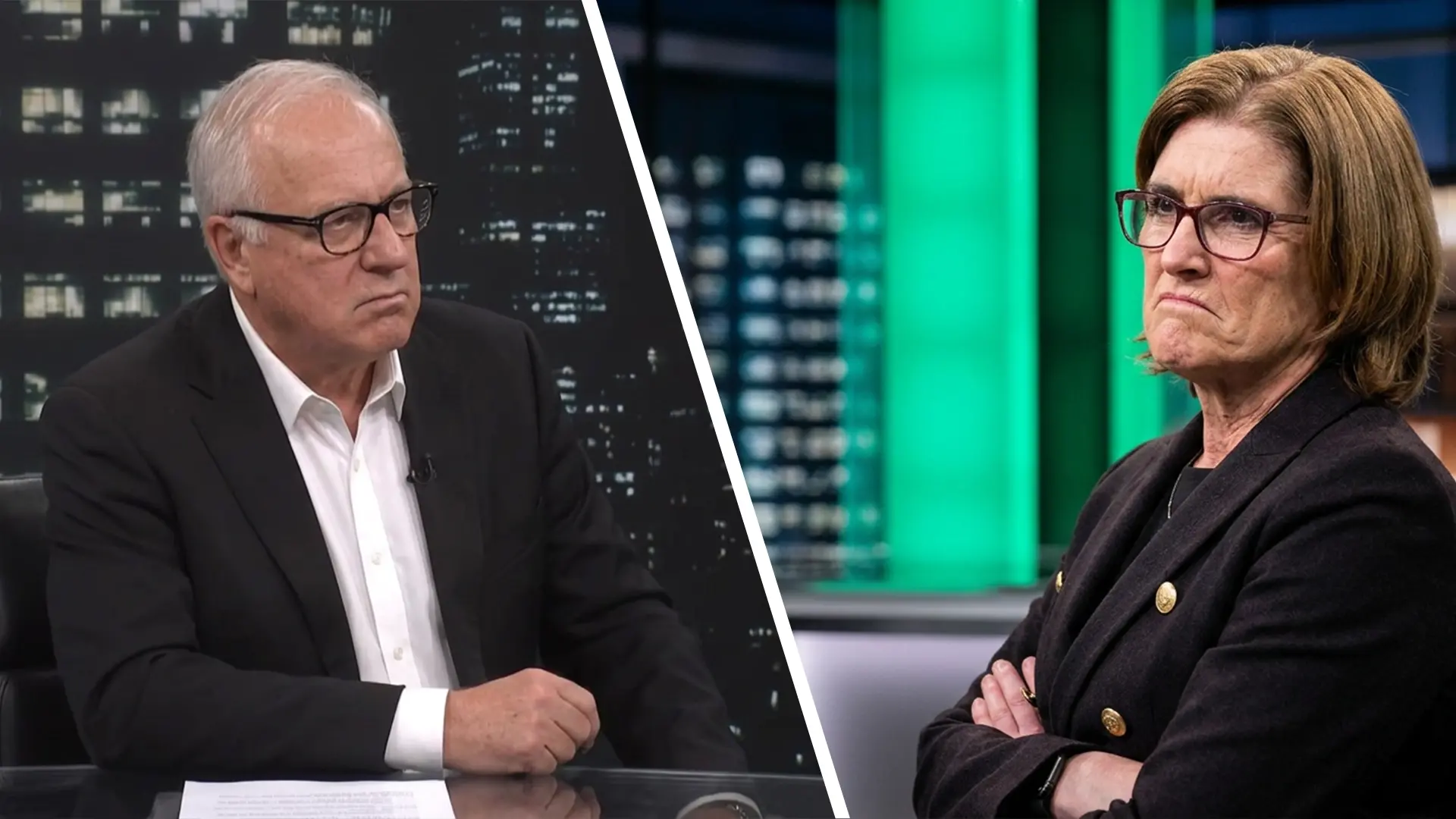
For millions of Australians, the hope was simple.
Advertisement
The worst was supposed to be over.
After years of rising living costs, expensive mortgages and relentless pressure on household budgets, many borrowers had been waiting for the moment when interest rates would finally begin moving decisively lower.
Instead, Australia has received a very different message.
And this time, the warning is becoming difficult to ignore.
Reserve Bank Governor Michele Bullock says inflation risks are materialising.
Veteran financial commentator Alan Kohler is warning that forces far larger than Australian households are pushing borrowing costs higher.
And financial markets are now preparing for something many mortgage holders desperately hoped they would not see again:
another interest-rate rise.
Michele Bullock’s Latest Words Were Difficult to Ignore
Appearing before a parliamentary committee on September 18, Bullock delivered a sobering assessment of Australia’s inflation problem.
The RBA had hoped some of the pressures hitting prices would prove temporary.
That confidence is weakening.
Persistent energy costs and global supply disruptions are making it increasingly difficult for the central bank simply to wait for inflationary pressures to disappear.
Bullock acknowledged that the economic trade-off facing the RBA had become worse.
Her message was particularly stark: the Middle East shock had effectively made Australia poorer, and the Bank could not respond by allowing inflation to get out of control.
For mortgage holders, those words matter.
Because when the Reserve Bank becomes more worried about inflation, the possibility of higher interest rates returns.
And this time markets believe that possibility is very real.
September 29 Could Become a Painful Date
The RBA’s Monetary Policy Board meets on September 28 and 29.
The cash rate currently stands at 4.35 per cent after the Bank left it unchanged in August.
But expectations have changed rapidly.
By September 18, financial markets were pricing approximately a 95 per cent chance of another increase at the September meeting, according to LSEG data reported by ABC.
Such a move would take the cash rate to 4.60 per cent.
And economists are not necessarily expecting the story to end there.
Markets were also assigning a meaningful probability to another increase in November.
For Australians already struggling with mortgages, that is the news they did not want.
Alan Kohler Has Been Warning About Something Bigger
Kohler’s concern goes beyond a single RBA meeting.
The veteran financial journalist has been examining what is happening across global bond markets — and the picture is uncomfortable.
Government borrowing costs have been climbing around the world.
Australian bond yields have reached levels not seen for around 15 years.
Similar movements have appeared in the United States, Britain, France, Germany and Japan.
That matters because interest rates do not exist in isolation.
Governments borrow.
Companies borrow.
Home buyers borrow.
Investors decide what return they require for lending money.
When the global price of money changes, the consequences eventually spread far beyond financial markets.
Kohler has argued that something deeper and more structural than a conventional inflation cycle may now be taking place.
Then Came an Even Darker Warning
Earlier this month, Kohler examined the extraordinary pressure developing in global bond markets.
His analysis raised the possibility of the world moving along a trajectory toward another financial crisis if the forces driving borrowing costs higher continue.
That does not mean a financial crash is certain.
But the combination is worrying.
Inflation remains stubborn.
Governments carry enormous debts.
Bond yields are rising.
Asset prices have become dependent on assumptions about future interest rates.
And households have spent years adjusting their finances around an era of relatively cheap money that may now be disappearing.
For Australia, the consequences are particularly sensitive.
Because Australians carry enormous amounts of mortgage debt.
The Housing Market Is Already Feeling It
Australia’s property market has begun weakening.
RBA officials told parliament that Sydney and Melbourne dwelling prices had fallen roughly 5 to 6 per cent from their recent highs, while falls elsewhere had generally been smaller.
Bullock acknowledged that housing conditions had softened and that a larger-than-expected decline could pose a downside risk to economic activity.
The RBA’s response, however, contained little comfort for homeowners hoping falling prices would automatically prevent another rate increase.
Officials pointed out that Australian housing prices remain dramatically higher than before the pandemic.
In Bullock’s assessment, prices were still around 50 per cent above early-2020 levels.
In other words, the Bank sees the downturn.
It simply does not yet see it as catastrophic enough to outweigh the inflation problem.
And That Creates a Brutal Situation for Families
Imagine the position of a typical mortgage holder.
The value of the home may be falling.
The mortgage does not fall with it.
Food remains expensive.
Energy costs remain high.
And now borrowing costs could rise again.
This is where discussions about inflation percentages and monetary policy stop being abstract economics.
Every RBA decision eventually arrives at someone’s kitchen table.
For a household carrying a large variable-rate mortgage, another increase can mean finding additional money every month simply to service the same home.
There is no new bedroom.
No renovation.
No better house.
Just a larger repayment.
Bullock Is Facing an Almost Impossible Trade-Off
It would be easy to frame Michele Bullock as simply choosing to inflict more pain on borrowers.
The reality is more complicated.
The RBA has an inflation target.
If it allows inflation to become entrenched, the consequences can ultimately be even more damaging.
Bullock told parliament that persistent supply shocks make it harder to simply “look through” temporary increases in prices because businesses can begin passing higher costs through to customers and inflation expectations can change.
That is the nightmare central banks want to avoid.
Once households and businesses begin assuming prices will keep rising, inflation can become much harder to eliminate.
So Bullock faces an unpleasant choice.
Allow higher inflation to erode household purchasing power.
Or use interest rates to suppress demand — knowing mortgage holders will carry much of the immediate burden.
Neither option feels particularly good to the people paying the bills.
Kohler Questions Whether Rates Can Fix the Real Problem
This is where Kohler’s analysis becomes particularly important.
Some of the forces pushing Australian inflation higher have little to do with Australians spending too much money.
Kohler recently identified three major pressures: the Middle East conflict and its effect on energy, the extraordinary global investment boom surrounding artificial intelligence, and weaknesses in Australia’s own productive capacity.
An Australian interest-rate increase cannot end a war.
It cannot stop American technology companies spending billions on AI infrastructure.
And it cannot instantly build additional productive capacity inside Australia.
Yet higher rates still hit Australian households.
That creates an uncomfortable question.
What if Australians are being asked to absorb the cure for an inflation problem they did not entirely create?
The Era of Cheap Money May Really Be Over
Perhaps the most unsettling message came not directly from Bullock but from her deputy, Andrew Hauser.
At the parliamentary hearing, Hauser suggested global real interest rates may simply be returning to more historically normal levels after the extraordinarily low-rate era following the global financial crisis.
His question was revealing:
Have borrowers adjusted to that new reality?
For Australians who purchased expensive homes while interest rates were close to record lows, that question carries enormous consequences.
Maybe the painful part isn’t waiting for rates to return to the old normal.
Maybe this is the new normal.
Nobody Can Say Exactly What Happens Next
There is an important distinction here.
Michele Bullock has not announced that rates will rise on September 29.
That decision belongs to the Monetary Policy Board.
Alan Kohler has not predicted with certainty that Australia is heading into a financial catastrophe.
And falling house prices do not automatically mean a housing crash.
But the warning signals have become harder to dismiss.
Inflationary pressures have strengthened.
Bond yields are elevated.
Mortgage rates remain painful.
Housing has weakened.
And economists increasingly expect the RBA to tighten policy again.
The Sad Part Is That Australians Have Heard This Story Before
For households, perhaps the hardest part is psychological.
Australians have spent years being told to endure.
Endure inflation.
Endure higher mortgage repayments.
Cut discretionary spending.
Wait for prices to stabilise.
Wait for interest rates to fall.
For a while, it appeared that relief might finally be approaching.
Now the conversation has changed again.
Bullock is warning about inflation.
Kohler is warning about structural forces pushing borrowing costs higher.
Economists are discussing another rate rise.
And homeowners are once again looking at their monthly repayments wondering how much more room remains.
There has been no personal tragedy involving Alan Kohler or Michele Bullock.
The troubling story is what they are describing.
Because the latest message coming from Australia’s economic establishment is one millions of families hoped they would never have to hear again:
the financial pressure may not be over yet.
And for some households, the next chapter could be harder than they expected.

