Home Author
Author

James Anderson

Advertisement

When it comes to the federal budget, attention is usually focused on the numbers. However, behind every financial indicator lie different visions of what the country’s economic development should look like.

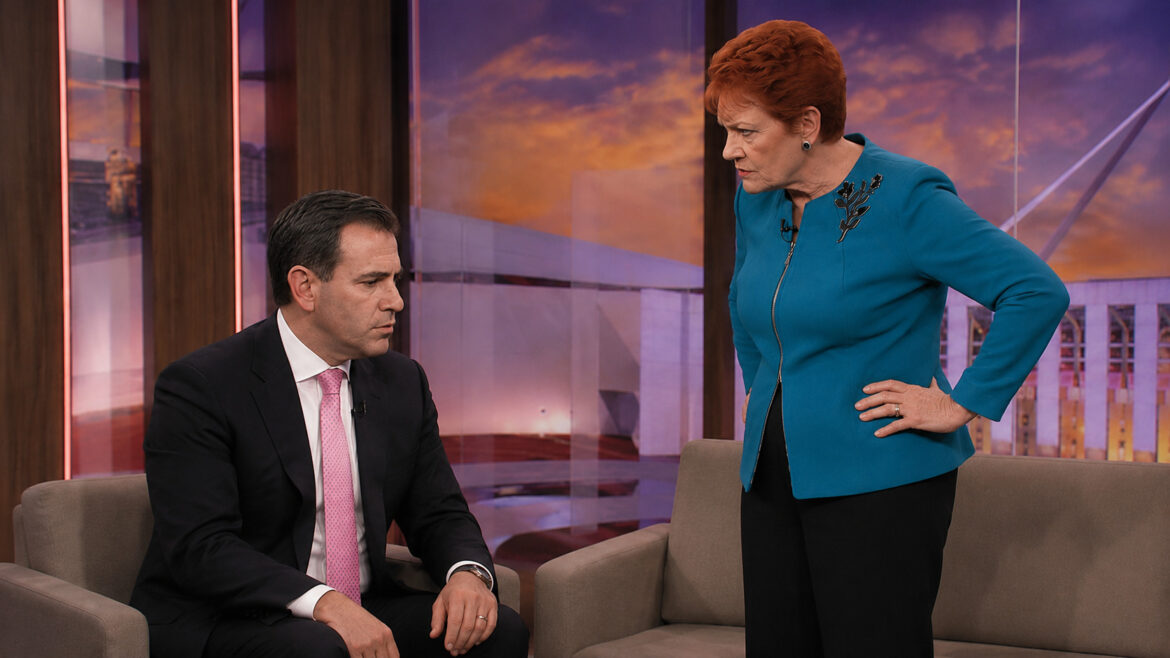
That is precisely why the comments by Pauline Hanson and Federal Treasurer Jim Chalmers have once again become part of a broad public debate.

Although their assessments differ significantly, both sides are addressing issues that directly affect millions of Australians: the cost of living, tax policy, and the long-term sustainability of the economy.

One Budget—Several Perspectives

In presenting the government’s priorities, Jim Chalmers emphasized the need to sustain economic growth while investing in healthcare, infrastructure, and the sustainability of public finances.

Pauline Hanson, in assessing the budget initiatives, emphasized how the proposed changes might affect families, homeowners, small businesses, and people who have built up their savings over many years.

It is precisely this difference in approach that has become one of the most discussed aspects of the budget campaign.

Why the Discussion Wasn’t Limited to Parliament

Economic policy has long ceased to be a topic exclusively for experts.

Tax changes, housing costs, inflation rates, and government spending directly affect everyday life, which is why such issues quickly extend beyond the scope of parliamentary debates.

As new comments emerged, the discussion spread among business leaders, economists, and the general public, each of whom assessed the proposed solutions in their own way.

The Conversation Turned Out to Be Broader Than Just the Budget

According to many observers, the main topic was not the content of individual measures, but the overall outlook for Australia’s economic future.

Some believe that the key task remains maintaining sustainable growth and gradually implementing long-term reforms.

Others are convinced that the cost of living and the financial burden on families and entrepreneurs should remain the priority.

It is precisely this difference in approaches that continues to shape the public debate.

Why This Topic Keeps Coming Up

Each new phase of the budget debate is inevitably accompanied by various assessments of its potential consequences.

That is why the statements made by Pauline Hanson and Jim Chalmers continue to draw attention even after the main parliamentary debates have concluded.

For some, their comments help provide a better understanding of economic policy priorities.

For others, they provide an opportunity to compare different perspectives on Australia’s future development.

This is precisely why the conversation surrounding the budget and economic reforms continues to be one of the most prominent topics on the national agenda.

Advertisement

Not every interview becomes a topic of discussion after it airs. More often than not, viewers remember a few memorable quotes, and the conversation itself quickly gives way to new stories.

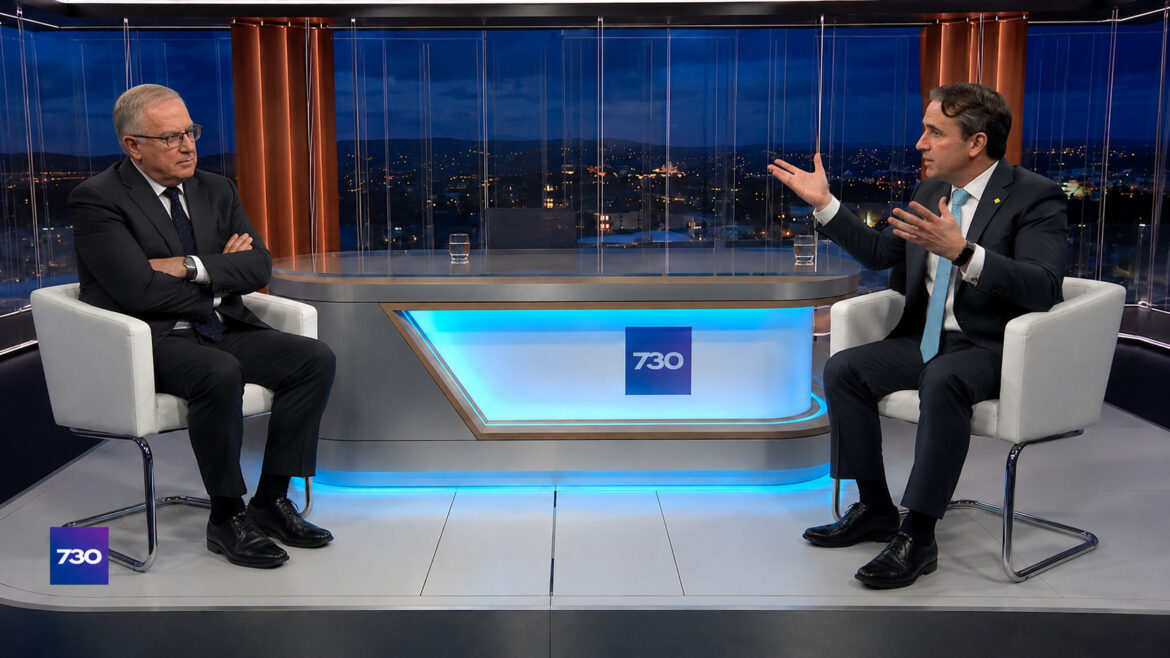
However, the conversation between financial journalist Alan Kohler and Commonwealth Bank CEO Matt Comyn unfolded differently.

The focus was not on individual statements, but on a broader perspective of how Australia’s economy is changing under the influence of new technologies, investments, and business expectations.

From the Current Situation to Long-Term Changes

Instead of focusing exclusively on banking results or financial metrics, the conversation gradually shifted to broader issues.

  •  How will the way large companies operate change?
  •  What skills will be in highest demand?
  • And will the Australian economy be able to remain competitive in the coming years?

Most of the discussion revolved around these topics.

It Wasn’t the Answers That Caught Attention, but the Course of the Conversation Itself

As the conversation progressed, it became apparent that the discussion was increasingly shifting away from the banking industry itself.

Alan Kohler consistently steered the conversation toward issues that extend far beyond the financial sector.

In response to these questions, Matt Comyn spoke about digital transformation, the adoption of artificial intelligence, and the need to adapt to rapidly changing conditions.

As a result, the interview came across more as a conversation about the future of the economy than about the operations of a single bank.

Why This Piece Got a Follow-Up

After the program aired, it wasn’t specific figures or forecasts that caught the audience’s attention.

Instead, the logic behind the discussion itself was the focus of much more frequent discussion.

For many viewers, the most interesting aspect was the attempt to link technological changes to how companies, employees, and entire industries will operate in the coming years.

That is precisely why the interview continued to be discussed even after the broadcast ended.

What Makes This Topic Relevant

Today, issues of productivity, automation, and business development concern more than just the executives of large companies.

They are directly linked to the labor market, investment, and economic growth.

For this reason, such discussions are increasingly attracting the interest of a much broader audience than just the professional financial community.

Why Interest in the Conversation Persists

According to business commentators, such interviews offer a glimpse into economic changes not through statistics, but through the practical experiences of people who make daily decisions at the country’s largest companies.

This is precisely why the discussion surrounding the conversation between Matt Comyn and Alan Kohler continues to be part of a broader debate about the future of the Australian economy.

For some, this conversation provided an opportunity to better understand the views of the head of the country’s largest bank.

For others, it served as a reason to reflect on how technology and new economic processes will affect Australia in the coming years.

Advertisement

Economic issues rarely have simple answers. That is precisely why discussions about the budget and government spending in Australia almost always extend far beyond the walls of Parliament.

At the center of one of the most recent such debates were Pauline Hanson and Federal Treasurer Jim Chalmers—politicians who have differing views on the country’s current economic priorities.

Their comments have once again drawn attention to how Australia should respond to the challenges of the coming years.

Not About Numbers, But About Priorities

Although the discussion began with budget figures and government spending, the conversation gradually shifted to broader issues.

What decisions can support economic growth?

How can a balance be maintained between business development and social support?

And which measures will prove most effective in the long term?

It was precisely these topics that formed the basis of both sides’ main arguments.

Different Approaches to a Single Goal

Jim Chalmers spoke about the need to maintain economic stability while simultaneously creating conditions for investment, employment growth, and industrial development.

Pauline Hanson, for her part, pointed out that many Australians assess the economic situation primarily through the cost of living, household expenses, and day-to-day financial decisions.

Despite their differing views, both approaches reflect a desire to find the most effective path for the country’s development.

Why This Topic Has Resurfaced

The economy remains one of the most talked-about topics in Australia.

Any changes to tax policy, the budget, or government programs quickly become a matter of public interest.

That is precisely why the latest comments by Pauline Hanson and Jim Chalmers have once again taken center stage among business commentators and political analysts.

Beyond Political Disagreements

Observers note that such discussions are important not only from a political standpoint.

They help provide a better understanding of the expectations held by different segments of society and the proposed ways to address economic challenges.

Ultimately, the discussion touches on issues that are equally important to both entrepreneurs and ordinary families.

Why the Story Continues to Unfold

Interest in the topic stems not from individual statements, but from a broader conversation about the future of the Australian economy.

As new economic data emerges, such discussions are likely to continue.

This is precisely why the positions of Pauline Hanson and Jim Chalmers continue to attract attention, remaining part of one of the most important public issues of recent months.


Advertisement

Sometimes interviews are memorable not for bold statements, but for the moment when the conversation unexpectedly takes a different turn.

That’s exactly what happened during a conversation between financial journalist Alan Kohler and Commonwealth Bank CEO Matt Comyn, which focused on the future of the economy and technological changes.

Instead of the usual discussion of banking metrics, the conversation gradually turned into a broader exchange of views on what Australian business might look like in the coming years.

The Conversation Started on a Completely Different Topic

The first few minutes of the interview focused on the economic situation and business expectations.

However, Alan Kohler then suggested looking at current events not through the lens of financial results, but through the impact of new technologies on companies’ day-to-day operations.

It was this shift that made the conversation significantly more substantive.

Matt Comyn noted that the adoption of new digital solutions is already changing the way large organizations operate, but the key factor remains people who are able to adapt quickly to new conditions.

Why This Particular Episode Stuck with Viewers

After the program aired, it wasn’t specific figures or forecasts that captured the audience’s attention.

The discussion centered on a broader question: how large companies should prepare for the next phase of technological change.

According to many observers, it was this part of the conversation that proved most relevant to a broad audience.

The Interview Went Beyond Banking Topics

As the conversation progressed, it became clear that the discussion was not limited to the financial sector.

The conversation touched on issues such as workforce development, business growth, productivity, and the competitiveness of the Australian economy.

As a result, the interview attracted interest not only from representatives of the banking industry but also from entrepreneurs in other sectors.

What Observers Are Noting

Business journalists noted that the conversation was relaxed yet rich in practical questions.

Instead of discussing short-term news, the participants focused on longer-term trends that are already beginning to influence the labor market and corporate development.

It is precisely this format that many consider one of the reasons why the interview continued to be discussed even after it aired.

Why Interest Persists

Today, the economy and technology are increasingly viewed as interconnected topics.

As a result, the conversation between Alan Kohler and Matt Comyn proved interesting to a much broader audience than a traditional interview about the banking industry.

For some viewers, it was an opportunity to hear the perspective of the head of the country’s largest bank.

For others, it was a reason to reflect on how technological changes will affect Australia’s economy in the coming years.

Advertisement

A New Economic Debate Between Pauline Hanson and Jim Chalmers Has Captured Australia’s Attention

The economic agenda has once again become a major topic of public discussion after One Nation leader Pauline Hanson and Federal Treasurer Jim Chalmers presented differing views on budget policy priorities.

Although such disagreements are not uncommon in Australian politics, this time the focus was less on political statements and more on how both sides explained their views on the economic situation.

During his public remarks, Jim Chalmers spoke about measures that, in the government’s view, should support the economy, ease the strain on household budgets, and create conditions for long-term growth.

Pauline Hanson, commenting on the budget, expressed a different point of view. In her opinion, when discussing taxes, spending, and the cost of living, more attention should be paid to those segments of the population that are most affected by economic changes.

After the speeches were published, the discussion quickly spread beyond the confines of parliamentary debates.

Economists, journalists, and business leaders began comparing the proposed approaches, noting that they reflected different views on the role of the government in supporting the economy.

For many Australians, the main issue was not the political disagreements themselves, but how future decisions might affect the cost of living, taxes, and household expenses.

Observers note that such discussions become particularly prominent during budget preparation and impact assessments.

When government officials and the parliamentary opposition interpret the same economic indicators differently, public interest in such statements naturally increases.

This is precisely why the comments by Pauline Hanson and Jim Chalmers have attracted attention far beyond the political community.
The cost of living, housing affordability, and the level of government spending remain key issues for many Australians.

For this reason, any public assessment of budget policy inevitably becomes part of a broader national discussion.
Although Pauline Hanson’s and Jim Chalmers’ positions differ significantly, both sides agree on one thing: the economic decisions made today will have long-term implications for the country.

This is precisely why the discussion of their latest comments continues to be a prominent topic on the Australian political agenda.


Advertisement

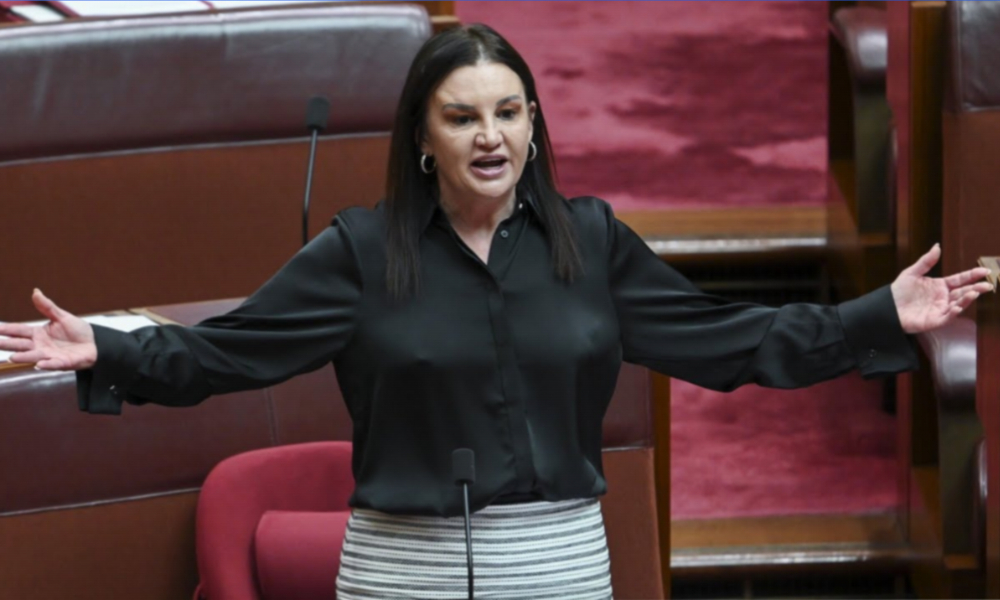
Recent Comments by Jacqui Lambie and Angus Taylor Have Once Again Captured Australia’s Attention

Economic policy has once again become a major topic of public debate in Australia following a series of public comments by Senator Jacqui Lambie and Opposition Spokesperson Angus Taylor.

Although both politicians have long been known for their differing views on government spending and fiscal policy, their latest statements have once again sparked widespread interest among both experts and ordinary Australians.

Different Approaches to the Same Issues

During recent public appearances, Jacqui Lambie spoke about the need to pay special attention to issues that directly affect citizens’ standard of living.

Angus Taylor, for his part, focused on the efficiency of government spending, economic growth, and long-term budget sustainability.

Despite their differing approaches, both politicians spoke about the challenges the country faces today.

Why This Discussion Has Attracted So Much Interest

The economic situation remains one of the most discussed topics in Australia.

The cost of living, government spending, and economic development are regularly the subject of public debate.

That is precisely why any statements by prominent politicians on these issues quickly attract the attention of the media and social media users.

The Discussion Continued After the Speeches

After the comments were published, many analysts noted that the discussion reflected different approaches to addressing economic challenges.

Some consider maintaining fiscal discipline and stimulating investment to be a priority.

Others point to the need for additional support for certain segments of the population and regions.

Such differences are a normal part of the democratic political process and allow society to compare different options for the country’s development.

What Observers Note

Economic commentators believe that such public discussions help provide a better understanding of the positions of leading Australian politicians.

In their view, open discussion of budget and government spending issues remains a vital part of shaping economic policy.

Furthermore, such statements allow citizens to evaluate various proposals that may be discussed in the future.

Why This Topic Continues to Resurface

Although no new decisions have been made following the latest comments, interest in the topic remains high.

Issues related to the economy, tax policy, and government spending continue to rank among the most important for many Australians.

Therefore, any new statements by Jacqui Lambie and Angus Taylor invariably become part of a broader public discussion about the country’s future economic development.


Advertisement

What Remained Beyond the Headlines After Sarah Ferguson and Matt Comyn’s Conversation

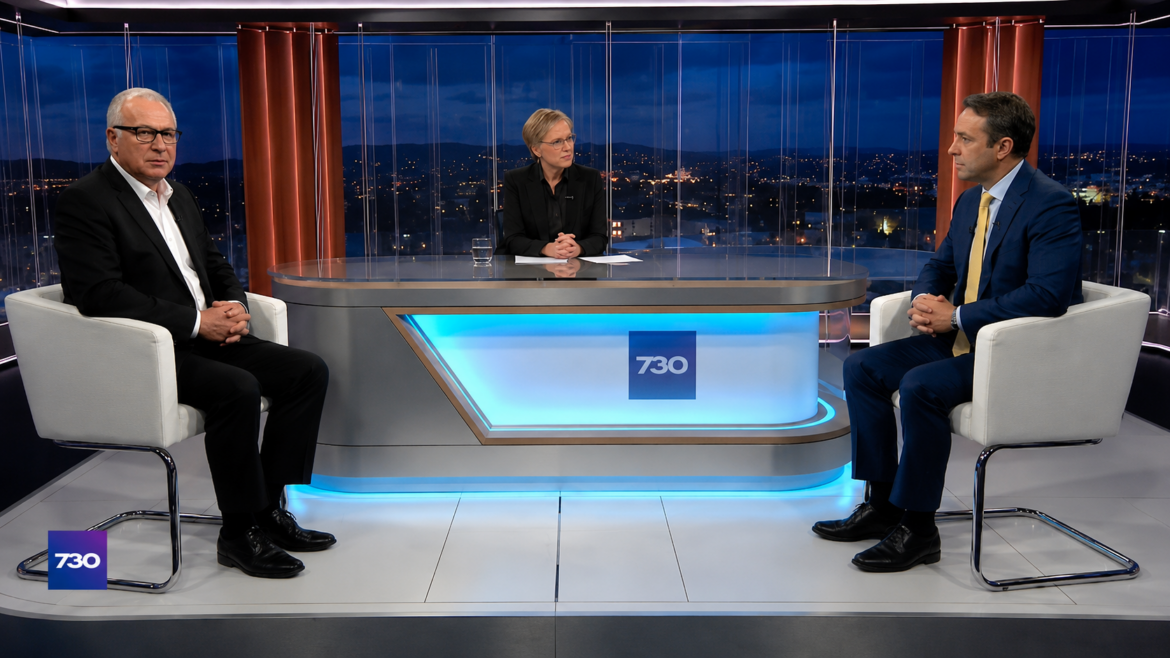
Most television interviews end when the broadcast ends. However, journalist Sarah Ferguson’s conversation with Commonwealth Bank CEO Matt Comyn continued to take on a life of its own even after the program ended.

This wasn’t due to any sensational statements or unexpected news. On the contrary—what caught viewers’ attention was how thoroughly the conversation delved into topics rarely discussed in this kind of setting.

Instead of the usual discussion about the banking system, the conversation gradually shifted to issues that concern virtually every Australian today: the development of artificial intelligence, the future of jobs, and how the economy will change in the coming years.

Matt Comyn noted that technology is already becoming part of the daily operations of many companies. At the same time, in his view, the main question is not about the technology itself, but rather how quickly people and organizations will be able to adapt to the new conditions.

It was this part of the conversation that sparked the most active reaction after the program aired.

Why the Interview Was More Than Just Another Broadcast

In the days that followed, various excerpts from the conversation began to appear in articles, business reviews, and online discussions.

The reason turned out to be quite simple.

The topic of artificial intelligence has long ceased to be a matter exclusively for specialists.

Today, it is directly linked to what the jobs of the future will look like, which skills will be in demand, and how the country’s largest companies will evolve.

As a result, the conversation quickly expanded far beyond the banking industry.

It Wasn’t Just the Answers That Caught People’s Attention

Many viewers noted that it was Sarah Ferguson’s questions that shaped the course of the entire conversation.

They allowed the discussion to move from specific technological solutions to a broader conversation about the future of Australia’s economy.

According to some observers, it was this format that made the interview stand out among the multitude of other business programs.

Today, the economy and technology are changing faster than they were a few years ago.
That’s why every public appearance by the leaders of major companies inevitably attracts interest from both the business community and the general public.

The recent conversation between Sarah Ferguson and Matt Comyn was yet another example of how a routine interview can spark a much broader public discussion.
Even some time after the broadcast, specific excerpts continue to be quoted and discussed, and interest in the issues raised remains high.

For some viewers, it was a conversation about the banking sector.

For others, it was an opportunity to consider how work, technology, and the Australian economy might change in the near future.

Advertisement

The Australian political agenda rarely proceeds without a discussion of the economy. That is precisely why the recent remarks by Jacqui Lambie and Angus Taylor have once again sparked a wide-ranging exchange of views among journalists, politicians, and the public.

Although their comments were made at different times, both politicians touched on one of the country’s most sensitive topics—government spending and the future of the economy.

The difference in their approaches quickly became apparent and sparked a new round of public debate.

The Conversation Went Beyond the Numbers

During her recent speeches, Jacqui Lambie focused particularly on issues that, in her view, directly affect the daily lives of Australians.

Angus Taylor, on the other hand, spoke about long-term economic priorities, the effectiveness of fiscal policy, and the need to maintain the sustainability of public finances.

Despite their different focuses, both politicians discussed which decisions might prove most important for the country in the coming years.

Why This Topic Quickly Gained Traction

Economic issues remain among the most discussed in Australia.

The cost of living, taxes, government spending, and business development regularly feature on the public agenda.

It is therefore not surprising that Lambie and Taylor’s statements quickly attracted the attention not only of political commentators but also of the general public.

The Discussion Centered on Different Approaches

The audience’s interest was focused not so much on individual quotes as on the differing views on how to address economic challenges.

Some consider supporting the population a priority amid a changing economic situation.

Others emphasize maintaining financial stability and stimulating long-term growth.

It is precisely the comparison of these approaches that has become the main topic of numerous publications and discussions.

Why the Story Continues to Unfold

According to observers, such discussions help provide a better understanding of how different figures in Australian politics assess current economic challenges.

They show that even with a common goal—strengthening the economy—there can be differing views on how to achieve it.

That is why every new public statement by Jacqui Lambie or Angus Taylor continues to generate interest and becomes part of a broader discussion about the country’s future.


Advertisement

Recent Comments by Jacqui Lambie and Angus Taylor Have Once Again Captured Australia’s Attention

Economic policy has once again become a major topic of public debate in Australia following a series of public comments by Senator Jacqui Lambie and Opposition Spokesperson Angus Taylor.

Although both politicians have long been known for their differing views on government spending and fiscal policy, their latest statements have once again sparked widespread interest among both experts and ordinary Australians.

Different Approaches to the Same Issues

During recent public appearances, Jacqui Lambie spoke about the need to pay special attention to issues that directly affect citizens’ standard of living.

Angus Taylor, for his part, focused on the efficiency of government spending, economic growth, and long-term budget sustainability.

Despite their differing approaches, both politicians spoke about the challenges the country faces today.

Why This Discussion Has Attracted So Much Interest

The economic situation remains one of the most discussed topics in Australia.

The cost of living, government spending, and economic development are regularly the subject of public debate.

That is precisely why any statements by prominent politicians on these issues quickly attract the attention of the media and social media users.

The Discussion Continued After the Speeches

After the comments were published, many analysts noted that the discussion reflected different approaches to addressing economic challenges.

Some consider maintaining fiscal discipline and stimulating investment to be a priority.

Others point to the need for additional support for certain segments of the population and regions.

Such differences are a normal part of the democratic political process and allow society to compare different options for the country’s development.

What Observers Note

Economic commentators believe that such public discussions help provide a better understanding of the positions of leading Australian politicians.

In their view, open discussion of budget and government spending issues remains a vital part of shaping economic policy.

Furthermore, such statements allow citizens to evaluate various proposals that may be discussed in the future.

Why This Topic Continues to Resurface

Although no new decisions have been made following the latest comments, interest in the topic remains high.

Issues related to the economy, tax policy, and government spending continue to rank among the most important for many Australians.

Therefore, any new statements by Jacqui Lambie and Angus Taylor invariably become part of a broader public discussion about the country’s future economic development.

Advertisement

Why Jacqui Lambie and Angus Taylor’s Latest Comments Have Attracted So Much Attention

Heated debates have long been a common occurrence in Australian politics. However, not all of them continue to be discussed after parliamentary debates have concluded.

This is exactly what happened following the latest exchange between Senator Jacqui Lambie and Opposition Representative Angus Taylor.

The conversation, which initially focused on economic policy and future government spending, unexpectedly became one of the most talked-about political topics in recent days.

During the discussion of financial issues, both politicians presented completely different views on how to respond to current economic challenges.

Jacqui Lambie emphasized issues that directly affect the lives of ordinary Australians, while Angus Taylor focused on long-term economic priorities and the effectiveness of government spending.
After the first reports appeared, social media users began actively analyzing the statements made by both politicians.

Some believed that the conversation reflected differing views on the future of Australia’s economy.
Others noted that such discussions are becoming increasingly important amid ongoing conversations about the cost of living and the state of the national budget.

According to analysts, the debate has gradually evolved beyond a routine political exchange of views.

Today, the discussion increasingly centers on broader issues: what the balance should be between government spending and economic support, how effectively current funding mechanisms are working, and which solutions will be most in demand in the coming years.

This is precisely why Lambie and Taylor’s remarks continue to be widely cited in political programs and news analyses.

Economic issues remain among the top concerns for most Australians.
Therefore, any public discussion of the budget automatically attracts heightened attention.

Experts note that such debates help provide a better understanding of the differences between leading politicians’ approaches to the country’s development.
Although no new decisions were made following this discussion, interest in the statements by Jacqui Lambie and Angus Taylor persists.

For some, this is an opportunity to evaluate different perspectives on Australia’s economic future.
For others, it is a reason to closely monitor how the political debate will unfold in the coming months.

One thing remains clear: the latest comments by Jacqui Lambie and Angus Taylor have once again made budget and public policy issues among the most discussed topics in Australia.


Advertisement

Newer Posts
logo (11)_new

Disclaimer: This website provides information for informational purposes only and accepts no responsibility for decisions made by users. We recommend that you carefully review all details and consult a professional.

All rights reserved © 2026